
5 Unique Types of Kayaking
9-minute read
When we hear the word “kayaking,” most of us think of a long, thin, covered boat with a hole in it that we move with a double-bladed paddle. And we would be right. But did you know there are at least five unique types of kayaking?

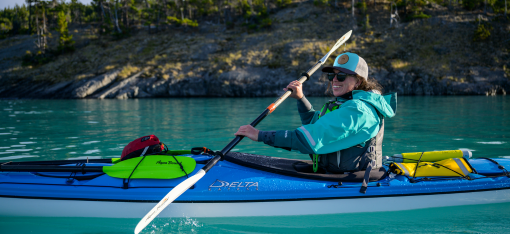
Sea kayaking in Alaska (Photo: Molly Hagbrand)
Each of these five types uses a different style of kayak—and often a different style of kayak paddle.
Some of these styles are ideal for beginner kayakers, while others demand some training and skill before attempting.
Let’s take a look at each type so you can see which type(s) might be a great fit for you:
Recreational Kayaking
Required Skill Level: Novice
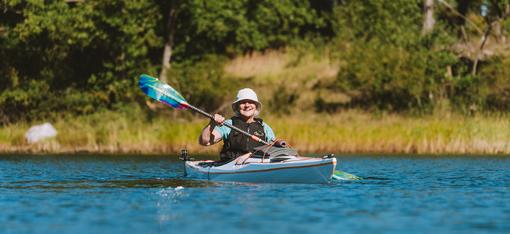
Recreational kayaking is just like it sounds—relaxing! It’s easy for beginners to try, even if they’ve never been on the water before. It’s easy for children to do—even very young children in a small kayak with a short paddle tethered to an adult. Kids as young as 6 can handle their own rec kayak unassisted (but supervised, of course) on calm, safe water.

Recreational kayaking is very beginner-friendly (Photo: Five2Nine)
Recreational kayaking is easy for anyone who can get into a kayak and paddle. It’s even feasible for those with physical limitations, with adaptive gear and assistance.
If you have trouble getting inside a kayak with a cockpit (the hole in the middle where the seat is), you can still kayak recreationally. Just use a sit-on-top kayak. These are even easier because there’s no climbing in. Just take it out a few steps into the water, sit on it, grab your paddle and away you go.
Kayaks designed for recreational paddling are fairly wide, averaging 9-12 feet long. Because they’re wide, they’re very stable, especially the sit-on-top models. In fact, it’s impossible to swamp a sit-on kayak since it can’t fill up with water. Perfect for someone a little nervous about trying it for the first time.
This type of kayaking is done on smaller, calm lakes and slow-moving rivers. You’ll want to stay off big water that can throw up big waves—rec kayaks aren’t designed to handle big waves or rapids above Class I or II.
There are many inflatable kayak options ideal for rec kayaking. Unlike rigid kayaks, inflatables are easy to store and transport when space is limited.
Any of our Sting Ray or Manta Ray paddles work great for recreational kayakers. While they cost more than the budget paddles you’ll find in big box stores, their performance is vastly better. They’re also much lighter, especially if you go with one of the Hybrid or Carbon options.
You’ll never regret spending more to get a lighter paddle. Not only are they made with better materials, but you’ll also experience less fatigue and soreness than with a heavy, clunky paddle. Since your paddle is your motor, this is more important than the average beginning kayaker thinks.
Sea Kayaking or Touring
Required Skill Level: Medium (or with a certified guide)
Kayaking on large bodies of water—like the Great Lakes or the ocean—or for hours or days on end is called kayak touring. And it’s done with a touring or sea kayak (we’ll use these terms interchangeably).
These types of kayaks are longer and narrower than rec kayaks. They’re designed for speed and efficiency on the water, so you can cover long distances with ease. And they’re designed to be able to handle the stronger winds and the bigger waves that are often present on large bodies of water.

Sea kayaks are long and narrow, designed for big water (Photo: Molly Hagbrand)
Touring kayaks are 12-18 feet long. The longer they are, the bigger the water they can handle. Some of them are tandem, made for two paddlers.
Shorter touring kayaks are ideal for paddlers who want to be on the water for several hours at a time, even if they’ll stick to small lakes and slow rivers. They’re more comfortable than the average rec kayak—with better seats, adjustable foot pegs and thigh pads.
If you want to try sea kayaking in very big water, this paddling environment requires respect and training. We recommend you start with a guided trip with a reputable outfitter—preferably one that’s over several days. If you love it, take some ACA-certified sea kayaking courses where you’ll learn the skills and safety requirements.
The ocean is even more demanding than huge lakes because you’ll deal with tides and currents.
Avid sea kayakers have a wide choice in Aqua Bound paddles. You’ll probably go with a lightweight “low-angle” paddle that’s designed for the relaxed pace over many hours:
-
Stingray Carbon (in four different models) is a mid-priced paddle with great performance.
-
Tango Fiberglass or Tango Carbon (12 different models) are a great choice for avid sea/touring kayakers who want a very lightweight and the finest materials. The colors in the fiberglass models are exceptionally cool!
- Ultralight Tetra (three different models) is our newest elite touring paddle. At just over 21 ounces, it’s impossibly light for a kayak paddle, but it’s also the toughest around.
Whitewater Kayaking
Required Skill Level: High
Whitewater kayaking is just like it sounds—kayaking in rivers with rapids and whitewater. This type of kayaking requires the most amount of training, as well as a willingness to be in the water a fair bit.

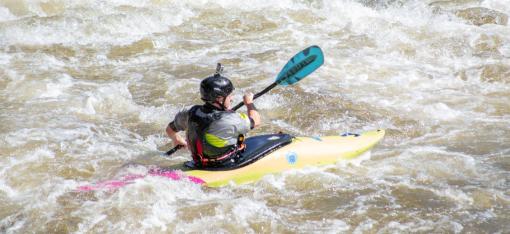
Whitewater boats maneuver very easily (Photo: Kate Wright)
“Swimming” is the term for finding yourself in the water during a river run because of a capsize. It’s a common occurrence with this type of kayaking, as is finding yourself upside down in your boat—with your options being to eject and swim or develop rolling skills to right yourself.
Whitewater kayaks are much shorter than other boats, with an exaggerated keel shape that makes them extremely maneuverable. Helmets and paddle skirts are mandatory, as well as proper gear for cold water dunking.
The best way to learn the skills you’ll need for whitewater kayaking are ACA-certified courses. Then look for a local whitewater club where you can meet other paddlers and maybe even borrow gear while you start to collect your own. These folks will be a great learning resource and provide “your people” to paddle with.

Avid whitewater kayakers can get a little crazy and even go over waterfalls (Photo: Seth Ezekiel West)
You’ll want a kayak paddle designed for whitewater:
-
Shred (7 different models) is our super-reliable whitewater paddle for beginning and intermediate paddlers.
- Aerial (28 different models) is our newer paddle that’s revolutionized what “durability” means in the whitewater world. Anyone serious about whitewater will love this paddle.
Kayak Surfing
Required Skill Level: High
Kayak surfing is just like surfing with a board, except it’s in a kayak. Kayak surfers like to ride the waves that break along the ocean’s coast using a sea kayak. “Rock-hopping” (also called “rock gardening” or “ocean play”) is to sea kayak around, between and even over coastal rocks, through inlets and islands, playing in the swells and waves.
Again, big water, waves and current require having excellent paddling experience. If you’re interested in learning this type of kayaking, you’ll benefit from both sea kayak and whitewater courses taught by certified coaches.
If you live in a coastal area, look for a local or regional surfing club among kayakers. You’ll meet like-minded folks and probably learn even more from them.
Kayak surfers and rock-hoppers use sea kayaks—those designed for an ocean environment with large swells and breaking waves.

Kayak surfing and rock hopping require a lot of skills (Photo: Reidar Sether)
The ideal paddle for this type of kayaking is a high-angle paddle that’s designed for the kind of aggressive paddling needed. The blades are a bit wider and shorter than a touring (or low-angle) paddle and work well to pull water quickly and maneuver easily.
Aqua Bound has several options. We suggest our lightest models to decrease unnecessary fatigue :
-
Manta Ray Carbon (4 different models) is a popular mid-priced paddle suitable for surfing.
-
Whiskey (11 different models) is a substantial upgrade over the Manta Ray in terms of weight and materials. You have the vibrant color options of the Fiberglass series or the ultralight 100% carbon models.
- Aerial, being a high-angle paddle, would also work well for performance, but it’s almost twice the weight of the Whiskey, so just keep that in mind.
Kayak Fishing
Required Skill Level: Novice (as long as you stick to beginner-friendly water)
Of the five on this list, this is the type of kayaking that’s more of a means than an end. Don’t let that make you think it’s not about kayaking, though. Being comfortable on the water, and especially as a paddler, will make your fishing much more enjoyable, productive and safe.
Start on smaller, calm lakes and slow-moving rivers and entry is quite easy. It does help to be proficient at either kayaking or fishing before you combine the two, but even that isn’t a requirement.

Kayak fishing is a beginner-friendly paddle sport (Photo: Mat Willder)
Most anglers prefer sit-on-top kayaks that are designed for fishing. They’re wide and stable, and have comfortable and often adjustable-height seats. They’re suitable for standing in, too, and have extra features like rod holders and storage areas for gear.
You’ll want a high-angle paddle for kayak fishing that will give you the powerful strokes you need to move a large kayak weighed down with gear. This is true even if you plan to use a pedal-driven or motor-driven boat. You’ll always want a paddle with you for safety and to get into shallow and weedy areas not suitable for drives and motors.
You’re certainly welcome to use any of Aqua Bound’s high-angle paddles for fishing that we’ve already mentioned here. But also, please check out our sister brand, Bending Branches. Branches has an entire line of kayak fishing-specific paddles with extras that are designed just for anglers.
[This blog was first published in 2019 and has been updated.]
What paddle questions do you have? Call or email our friendly Customer Service Team today: 715-755-3405 • sales@aquabound.com or choose our online chat option.
More for you…